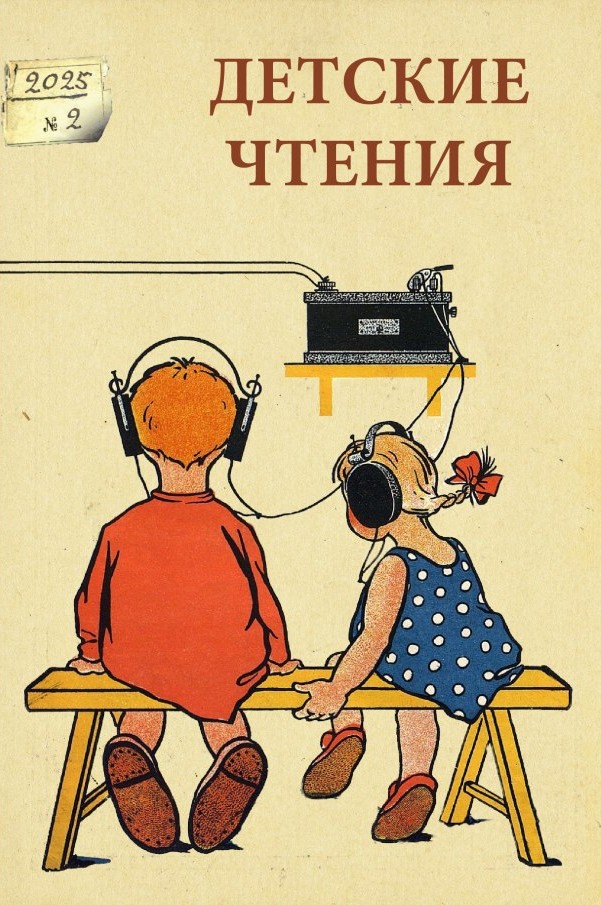
THE FORMULA OF HYGIENE IN EARLY SOVIET SANITARY-ENLIGHTENMENT LITERATURE FOR CHILDREN: FROM MOYDODYR TO THE SANITARY OATH
DOI:
https://doi.org/10.31860/2304-5817-2025-2-28-305-332Abstract
The protection of children’s and adolescents’ health was defined by the Bolshevik government, from the earliest years of the Soviet state’s existence, as one of its most important tasks. Alongside oral, visual, and performative arts, sanitary-hygienic literature was positioned as a crucial instrument for propaganda of personal and social hygiene, a healthy lifestyle, and the necessity of basic medical knowledge. The analysis of literary texts and their accompanying metatexts — official documents, critical and methodological articles — is based on the concept of the “formula.” Examples are provided demonstrating that ideologists and methodologists also operated with the concept of a formula when constructing the structure of sanitary-educational texts. It is shown that textual formulas, combining simplicity, rhythmic structure, and emotional coloring, employed strategies of persuasion, ridicule, and threat. Their genesis reflected general trends in linguistic transformations, including borrowings from military, religious, and bureaucratic discourses. The multi-addressee nature and broad genre repertoire of this literature made it possible to reach audiences across different age, educational, and social strata. The study concludes that the language of sanitary-educational literature of the 1920s was formed as part of the Soviet ideological project, combining the pragmatics of hygienic upbringing with the manifestation of a “new reality.”