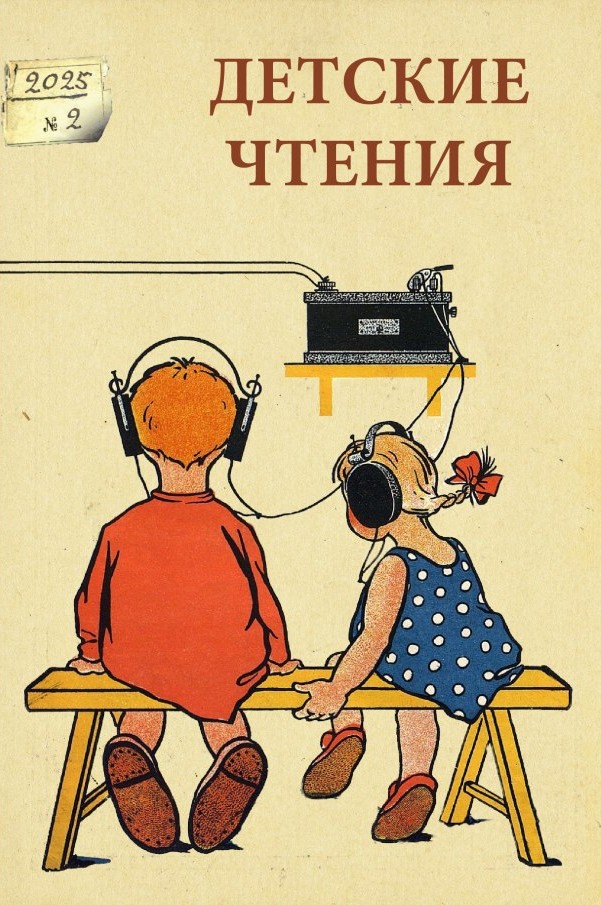
FROM PEDAGOGY TO JOURNALISM: TRANSFORMATIONS OF CHILDREN’S RADIO
DOI:
https://doi.org/10.31860/2304-5817-2025-2-28-333-361Abstract
The article briefly describes the history of children’s radio and the identification of its various forms. Initially, Western projects for distance education via radio emerged, which were later replicated in the USSR. However, by the 1930s, the USSR began to develop its own formats for working with children: propaganda and educational programs intended to unite schoolchildren across a vast country. In addition to listening to specialized programs, children began participating in radio production through clubs and school broadcasts. Both formats developed in parallel and persisted until the end of the Soviet Union, after which their popularity began to wane. School radio, like other technologies, was a space for pedagogical and media experiments, but also remained a tool for propaganda and ideological indoctrination. The content of the programs, their frequency, and the number of students involved varied from school to school. In some places, radio was a long-standing, popular project, while in others, its production and listening were more of a formality. After a literature review, the article includes two interviews about the experience of participating in the creation of school radio in St. Petersburg and Yekaterinburg.