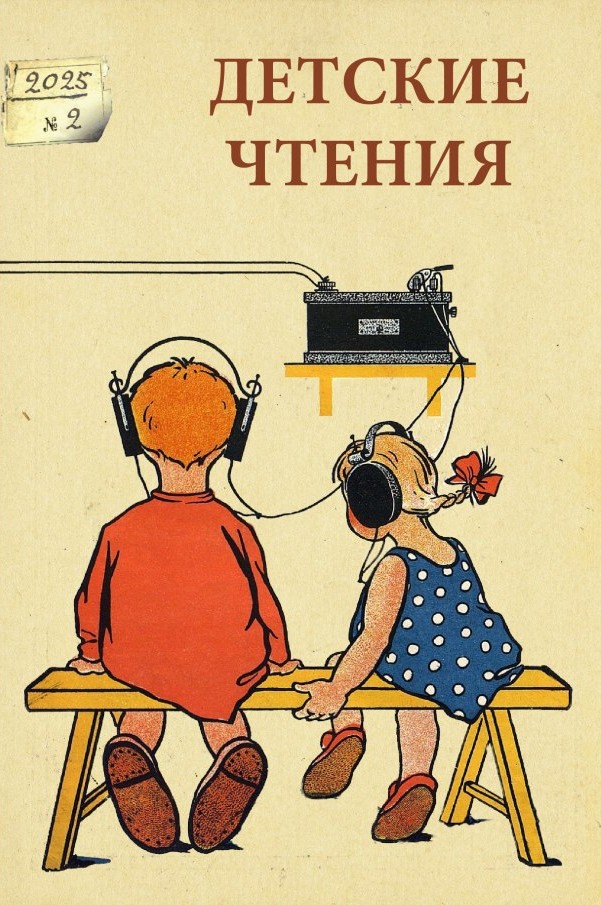
“TRUSTY OLD SPIKHA” AND BOSSY MOSCOW SPEAKING: THE IMAGES OF RADIO EQUIPMENT IN TWO LATE SOVIET CHILDREN’S FAIRY STORIES
DOI:
https://doi.org/10.31860/2304-5817-2025-2-28-174-194Abstract
The article addresses the representations of radio equipment in two late Soviet children’s fairy stories: The Little Warranty People (1974) by Eduard Uspensky and A Tale of True and False Friendship (1980) by Arkady and Boris Strugatsky. In these texts, different radios (a radio phonograph, a transistor radio) are portrayed as having agency and act as a plot-forming element. The aim of this article is to identify the features of creating the imagery of the radios, with a special emphasis on the analysis of what fundamental folklore and mythological sources can be found in the structure of this imagery. The article demonstrates that the image of these radios has a complex synthetic character. The authors combine and creatively reinterpret the elements from Russian and West European myths and tales, modernize them and bring them to the Soviet reality. The writers also incorporate these elements with Soviet childlore and folklore and give them new Soviet meanings. In the imagery of radio equipment, an essential part of Soviet (children’s) everyday life, there is also the “adult” content plan which emphasizes dual address of these fairy stories.